

A breathing practice does not need a studio commute or a large block of free time. With clear guidance and a stable place to sit or lie down, a person can create a purposeful pause at home, in a quiet office, or while traveling. Digital access makes the practice easier to place inside real life.
The strongest benefit of an online format may be repeatability. A session can begin before the first meeting, between demanding tasks, or as the day slows. Op e n supports that flexibility with guided breathwork alongside meditation, movement, music, and sound.
Why the Setting Still Matters
Online access removes distance, but the physical environment remains important. Choose a place where breathing can happen without interruption. Sit in a supportive chair or settle on a mat. Loosen restrictive clothing and keep the room at a comfortable temperature.
Headphones can make spoken cues easier to follow, but the screen does not need constant attention. Once the technique is understood, let the eyes close or soften if that feels safe. A simple digital session should direct awareness toward the body, not hold attention on the device.
A short three-minute guided breathing exercise from UCLA Health shows how a brief format can create a clear pause. The example is a useful reminder that duration alone does not determine whether a practice fits the day.

Match the Technique to the Need
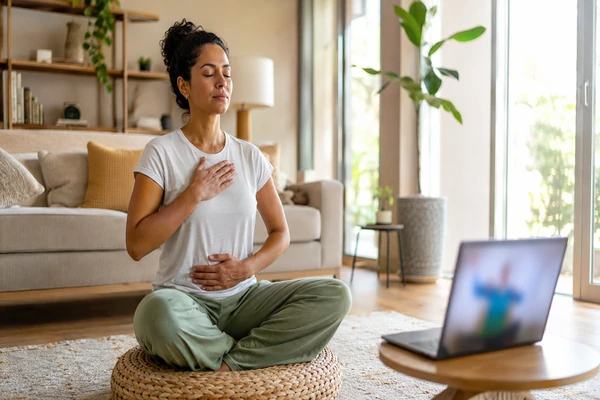
Different breathing patterns can feel calming, balancing, or activating. A slower exhale may suit an evening transition. Even counting can provide structure during a tense afternoon. Diaphragmatic breathing can help a beginner notice movement around the lower ribs and abdomen rather than lifting only through the upper chest.
Op e n’s guided online breathwork experiences give practitioners a way to explore varied approaches without having to build every session from scratch. The wider platform also allows a breathing practice to lead into meditation or mindful movement, making the routine feel more complete.
Begin with a clear intention but avoid demanding a specific outcome. “I will follow this practice for five minutes” is within the practitioner’s control. “I must feel calm by the end” is not. A neutral attitude makes it easier to observe the actual response.
Create a Repeatable Digital Ritual
Choose one cue, one place, and one starting session. The cue might be closing an email inbox at lunch. The place might be a chair by the window. The session might last five or ten minutes. Keep that combination steady for a week before adding more choices.
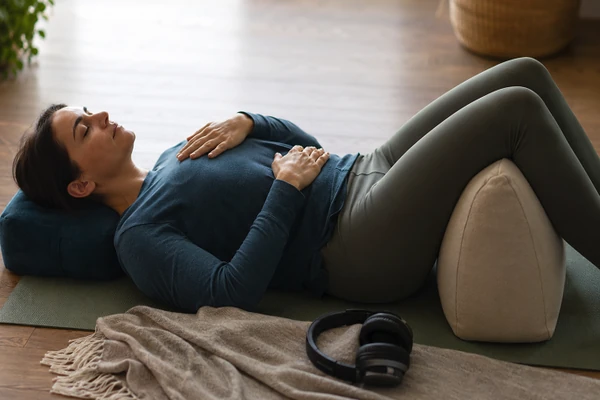
When travel or a changing schedule interrupts the usual setup, keep only the cue. The chair can become the edge of a hotel bed, and headphones can replace a quiet room. This portable version protects continuity without pretending every day offers ideal conditions. Returning in a reduced form is still returning.
Afterward, record one brief observation: energy rose, shoulders softened, attention steadied, or nothing obvious changed. All are valid information. This note can help identify which practices suit different times without turning the process into a complicated tracker.
The Cleveland Clinic’s guidance on diaphragmatic breathing explains how this form of breathing uses the diaphragm and provides a step-by-step starting position. It also notes that practice becomes easier over time. That principle applies broadly: familiarity reduces the mental effort required to begin.
Put Safety Before Intensity
Practice while seated or lying in a stable place. Never follow breathing exercises while driving, in water, or during a task that requires full attention. Stop if dizziness, tingling, pain, panic, or unusual discomfort appears.
Pregnant people and anyone with an acute or chronic health condition should consult a healthcare professional before trying breath holds, fast breathing, or other intensive techniques. Online convenience should not remove personal judgment.
Frequently Asked Questions
Can a beginner learn breathwork online?
Yes. Start with a clearly guided beginner session, keep the duration short, and choose gentle pacing.
Is a camera required?
Usually not for on-demand practice. The key needs are a safe setting, audible instruction, and enough room to sit or lie comfortably.
What if no change is noticeable after one session?
That is completely normal. Treat the first sessions as practice in attention and technique rather than a test of results.
Make the Next Pause Easier to Begin
Digital access works best when it removes friction without encouraging intensity. Explore Op e n, choose a guided session suited to the moment, and build a simple routine that can travel from one ordinary day to the next.