
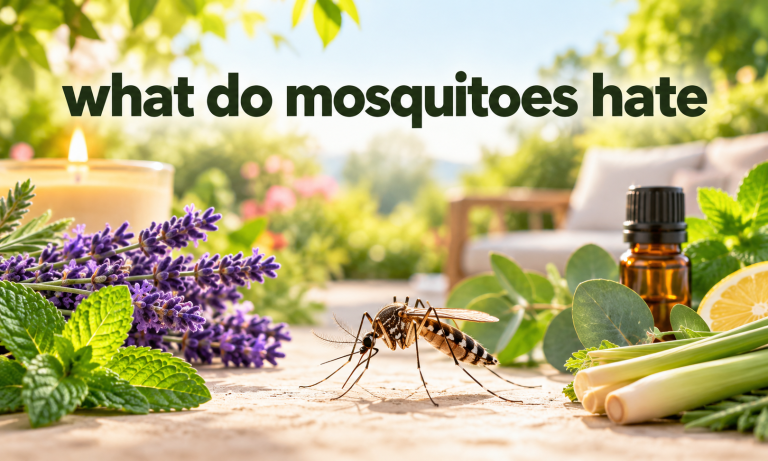
If you are wondering what do mosquitoes hate, the most useful answer is not a single household scent. Mosquitoes are repelled most reliably by products containing proven active ingredients such as DEET, picaridin, IR3535, oil of lemon eucalyptus or PMD, and 2-undecanone. They are also less likely to reach you when you use protective clothing, screens, treated gear, and measures that reduce standing water.
Natural scents such as citronella, peppermint, lavender, or eucalyptus are often promoted as mosquito deterrents, but their effectiveness and duration vary widely. natural mosquito repellents discusses several plant-based options, while US public-health agencies recommend choosing an EPA-registered repellent when reliable bite prevention matters.
What Repels Mosquitoes Most Reliably?
The CDC recommends EPA-registered insect repellents containing DEET, picaridin, IR3535, oil of lemon eucalyptus, PMD, or 2-undecanone. When used according to the label, these products are considered effective for preventing mosquito bites.
| Active Ingredient | Type | Good Choice For | Important Note |
| DEET | Synthetic repellent | General outdoor use and travel | Long history of use; protection time depends on concentration |
| Picaridin | Synthetic repellent | People who prefer a less oily feel | Effective against mosquitoes and often comfortable on skin |
| IR3535 | Synthetic repellent | Everyday outdoor protection | Available in some skin-applied repellents |
| Oil of lemon eucalyptus / PMD | Plant-derived or synthesized from plant compound | Adults and children age 3 and older | Do not use OLE or PMD products on children under 3 |
| 2-undecanone | Plant-derived ingredient | Mosquito bite prevention | Available in a smaller number of EPA-registered products |
Do Mosquitoes Hate DEET?
DEET is one of the best-studied mosquito repellents. Rather than killing mosquitoes, it interferes with the way they detect and approach people. Higher concentrations generally provide longer-lasting protection, but they do not necessarily repel more mosquitoes at any one moment.
Apply only as directed on the label. Avoid spraying directly onto the face, cuts, irritated skin, or under clothing. For children, adults should apply repellent to their own hands first and then spread it onto the child’s exposed skin.
Does Picaridin Keep Mosquitoes Away?
Yes. Picaridin is another EPA-registered active ingredient with strong evidence for mosquito protection. It is often described as less greasy and less noticeable in odor than some DEET products.
It can be a practical choice for hiking, gardening, camping, travel, or everyday outdoor use. As with any repellent, the length of protection depends on the concentration and product formulation, so follow the label for reapplication.
What Natural Smells May Repel Mosquitoes?
Several plant-derived scents have shown repellent activity in laboratory or small field studies. These include citronella, lemon eucalyptus, catnip, thyme, and some essential oils. The problem is that homemade mixtures and unregistered essential-oil products often evaporate quickly, making their protection less predictable.
Oil of lemon eucalyptus deserves special attention because EPA-registered products containing OLE or its active component PMD have been evaluated for effectiveness. That is different from using pure lemon eucalyptus essential oil, which the CDC does not recommend as a substitute for a tested repellent.
Does Citronella Work?
Citronella can repel mosquitoes for a limited period, especially in properly formulated skin products or when used in a small outdoor area. However, candles and torches do not create a reliable protective barrier around an entire patio or yard.
A breeze, open space, and mosquito species can all affect how well a citronella product performs. If mosquito-borne disease is a concern, an EPA-registered skin repellent is a more dependable choice.
Do Mosquitoes Hate Peppermint, Lavender, or Garlic?
Peppermint and lavender oils may have some repellent activity, but that does not mean rubbing a few drops of essential oil on the skin will provide dependable protection. Essential oils can also irritate skin, cause allergic reactions, and may be unsafe when used undiluted.
Garlic is another popular mosquito myth. Eating garlic or placing garlic around the yard has not been shown to provide reliable personal protection. The same caution applies to vitamin B supplements, dryer sheets, and ultrasonic devices.
Can Fans Keep Mosquitoes Away?
A fan can help because mosquitoes are weak fliers and moving air can make it harder for them to land. Airflow also disperses carbon dioxide and body odors that mosquitoes use to locate people.
Fans can be useful on porches, patios, or near outdoor seating, but they should be viewed as an extra layer of protection rather than a replacement for repellent.
What Attracts Mosquitoes in the First Place?
Mosquitoes use several signals to find a host. Carbon dioxide from breathing is a major cue, along with body heat, skin odors, and other chemicals released from the skin.
This is why simply masking your scent with perfume or essential oil is unreliable. Mosquitoes can use multiple signals at once, and different species respond differently.
How Can You Make Your Yard Less Attractive to Mosquitoes?
The CDC recommends removing standing water because many mosquitoes lay eggs in or near water. Mosquito-control guidance advises checking containers every week and emptying, scrubbing, turning over, covering, or discarding items that hold water.
Common breeding spots include flowerpot saucers, buckets, birdbaths, toys, clogged gutters, tires, trash containers, and small pools. Even small amounts of water can support mosquito development.
Does Permethrin Repel Mosquitoes?
Permethrin is an insecticide used on clothing and gear rather than directly on skin. Treated pants, socks, shirts, tents, and other gear can repel or kill mosquitoes and add another layer of protection.
CDC recommends products containing 0.5% permethrin for treating clothing and gear when used according to the label. Do not apply permethrin products directly to your skin.
What Mosquito-Repellent Methods Are Mostly Myths?
| Method | Reliable Protection? | Better Approach |
| Eating garlic | No good evidence of dependable protection | Use an EPA-registered repellent |
| Vitamin B supplements | Not proven to prevent bites | Choose a tested topical repellent |
| Ultrasonic mosquito devices | Not considered reliable | Use screens, repellent, and source reduction |
| Dryer sheets | Not a dependable mosquito strategy | Cover exposed skin and use repellent |
| Essential oil alone | Protection may be short or inconsistent | Use an EPA-registered formulation when available |
| Citronella candle alone | May help locally but is not dependable | Combine with personal repellent and airflow |
What Is the Best Mosquito Protection for Children?
Cover a child’s arms and legs when practical and use mosquito netting over strollers and carriers. Repellents should always be used according to the product label.
CDC advises against OLE or PMD products for children under 3 years old. Do not apply repellent to a child’s hands, eyes, mouth, cuts, or irritated skin. An adult should apply product to their own hands before gently applying it to a child’s face.
What About Pregnancy and Breastfeeding?
CDC states that EPA-registered insect repellents are considered safe and effective for pregnant and breastfeeding women when used as directed. This is important because mosquito-borne infections can have serious health consequences.
For anyone who is pregnant, breastfeeding, or caring for a young child, follow the label exactly and combine repellent with clothing, screens, and mosquito-control measures around the home.
Frequently Asked Questions
What smell do mosquitoes hate the most?
There is no single scent that reliably repels every mosquito. Proven EPA-registered ingredients such as DEET and picaridin are more dependable than relying on a household smell.
Do mosquitoes hate lemon eucalyptus?
EPA-registered oil of lemon eucalyptus or PMD products can provide effective protection. Pure lemon eucalyptus essential oil is not considered equivalent and is not recommended by CDC as a substitute.
Does peppermint keep mosquitoes away?
Peppermint oil may show some repellent activity, but homemade peppermint mixtures are not as predictable as EPA-registered repellents and may irritate the skin.
Do mosquitoes hate smoke?
Smoke can discourage mosquitoes in a small area, but it does not provide reliable bite prevention and inhaling smoke has health risks.
What can I put around my house to keep mosquitoes away?
The most effective approach is to remove standing water, repair screens, use air conditioning when available, and use fans or EPA-registered repellents when spending time outdoors.
What is the safest effective mosquito repellent?
EPA-registered repellents are evaluated for safety and effectiveness when used as directed. The best option depends on age, desired protection time, and personal preference.
Bottom Line
Mosquitoes may avoid certain scents, but reliable bite prevention depends more on tested repellents and physical barriers than on household remedies. DEET, picaridin, IR3535, OLE or PMD, and 2-undecanone are among the active ingredients recognized by US public-health agencies for effective mosquito protection.
For the best results, combine repellent with long clothing, screened doors and windows, permethrin-treated gear when appropriate, fans in outdoor seating areas, and weekly removal of standing water. Natural products can be useful in some situations, but untested essential oils and popular myths should not replace proven protection when mosquito-borne illness is a concern.