
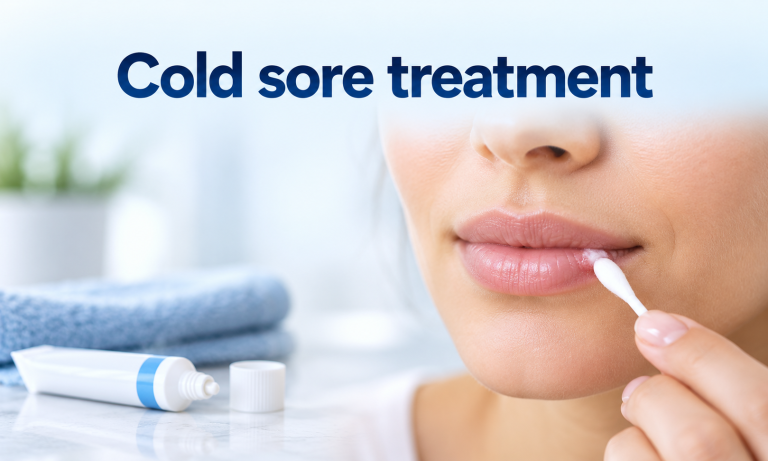
Cold sore treatment works best when it begins as early as possible, ideally during the tingling, itching, or burning stage before a visible blister fully develops. Cold sores are usually caused by herpes simplex virus type 1, or HSV-1, and although no treatment removes the virus from the body, antiviral medicines can shorten outbreaks and reduce discomfort.
Cold sores often progress through tingling, blistering, weeping, crusting, and healing. cold sore stages notes that early antiviral treatment may reduce the severity and duration of an outbreak, while supportive care can help with pain, dryness, and irritation.
What Is the Best Treatment for a Cold Sore?
The most effective treatment depends on how early you start, how often you get outbreaks, and how severe they are. For occasional mild cold sores, an over-the-counter antiviral such as docosanol may help. For frequent, severe, or very painful outbreaks, prescription oral antivirals are often more effective.
| Treatment | Availability | Best Time to Start | Main Purpose |
| Docosanol 10% cream | Over the counter | At first tingling or redness | May shorten healing time |
| Acyclovir | Prescription | As early as possible | Slows HSV replication and may shorten the outbreak |
| Valacyclovir | Prescription | At the first sign of symptoms | Convenient oral antiviral treatment |
| Famciclovir | Prescription | Early in the outbreak | Shortens or reduces recurrent outbreaks |
| Cold compress and pain relief | Over the counter or home care | Any painful stage | Reduces discomfort and swelling |
Why Does Starting Treatment Early Matter?
The herpes virus becomes active before the blister is fully visible. Many people first notice tingling, burning, itching, or tightness around the lip. This prodrome stage is usually the best time to begin treatment because antiviral medication works by interfering with viral replication.
Waiting until the sore is already crusted may still allow symptom relief, but antiviral treatment is generally less useful late in the outbreak. People who have predictable outbreaks may benefit from keeping prescribed medication available so they can start it immediately.
How Does Docosanol Work?
Docosanol 10% cream, sold in the United States under brands such as Abreva, is an over-the-counter option for recurrent cold sores on the face or lips. It is intended to be started at the first sign of tingling, redness, itching, or a developing bump.
Apply it according to the package directions and wash your hands before and after touching the area. Docosanol does not cure HSV and does not guarantee that a blister will not form, but starting early may modestly shorten an outbreak.
When Are Prescription Antivirals Used?
Prescription antivirals include acyclovir, valacyclovir, and famciclovir. MedlinePlus notes that valacyclovir is used to treat cold sores and works by slowing the spread of herpes virus in the body.
Oral antivirals are often considered when outbreaks are frequent, severe, slow to heal, or especially disruptive. A clinician may prescribe medicine to take only when an outbreak starts, or daily suppressive treatment for people with frequent recurrences.
The exact dose depends on the medication, kidney function, age, and medical history. Follow the prescription rather than using someone else’s antiviral medicine.
What Can You Do for Pain and Irritation?
Cold sores can sting, crack, and become painful while eating or talking. Simple supportive measures can make the healing period more comfortable.
- Apply a cool, damp cloth for several minutes to reduce discomfort.
- Use acetaminophen or ibuprofen if these medicines are safe for you and follow label directions.
- Keep the lips moisturized with a plain protective balm or petroleum-based product.
- Avoid picking, peeling, squeezing, or popping the blister.
- Choose soft foods if chewing or opening the mouth irritates the sore.
- Avoid very salty, spicy, or acidic foods if they sting the affected area.
Should You Pop a Cold Sore?
No. Popping or picking a cold sore can make the area more painful, delay healing, introduce bacteria, and spread HSV to your fingers or other parts of the body.
If the blister breaks on its own, gently keep the area clean and avoid unnecessary touching. Wash your hands with soap and water after applying medication or touching the sore.
How Long Do Cold Sores Usually Last?
Cold sores commonly heal on their own within about one to two weeks. MedlinePlus notes that there is no cure for cold sores, but antiviral medicines can help them heal faster and can also help prevent outbreaks in people who experience them frequently.
Healing time varies. Early treatment, immune health, the size of the outbreak, and whether the sore becomes irritated or secondarily infected can all affect recovery.
When Is a Cold Sore Most Contagious?
Cold sores can spread from the early tingling stage until the skin is fully healed. The risk is especially high when fluid-filled blisters are open or weeping.
Avoid kissing, oral sex, and sharing drinks, utensils, lip products, razors, towels, or other personal items during an outbreak. HSV can spread even before a blister is fully visible, so begin precautions when the early tingling sensation starts.
How Can You Prevent Spreading HSV to the Eyes?
Wash your hands after touching the lips or applying medication, and avoid touching or rubbing your eyes. HSV infection of the eye can damage the cornea and requires prompt medical treatment.
Seek urgent medical evaluation if you develop eye pain, redness, light sensitivity, blurred vision, excessive tearing, or a sore near the eye during a cold sore outbreak.
What Triggers Recurrent Cold Sores?
After the first infection, HSV remains in nerve cells and can reactivate later. Common triggers include illness, fever, stress, fatigue, sun exposure, hormonal changes, and physical irritation around the lips.
Triggers vary from person to person. If sunlight seems to cause outbreaks, using a lip balm with broad-spectrum SPF and protecting the face from strong sun may help reduce recurrences.
Can Home Remedies Cure a Cold Sore?
No home remedy has been shown to eliminate HSV. Cold compresses, moisturizer, and careful skin care can relieve symptoms, but they do not cure the infection.
Products such as lysine, aloe vera, propolis, tea tree oil, and other natural remedies are sometimes promoted for cold sores. Evidence is mixed or limited, and essential oils may irritate the lips. Do not place undiluted essential oils on a cold sore.
When Should You See a Doctor?
Most occasional cold sores can be managed at home, but medical evaluation is appropriate if outbreaks are frequent, unusually severe, very painful, spreading, or not healing normally.
| Reason to Seek Care | Why It Matters |
| Cold sore near the eye or eye redness, pain, or vision changes | Possible ocular herpes requires prompt treatment |
| Weakened immune system | HSV infections may become more severe or complicated |
| Severe or widespread sores | May require prescription treatment or another diagnosis |
| Sore is not healing after about 2 weeks | Persistent lesions should be reassessed |
| Frequent recurrent outbreaks | Suppressive antiviral therapy may be an option |
| High fever, difficulty swallowing, or severe mouth pain | May indicate a more extensive infection or another condition |
How Can You Reduce Future Outbreaks?
You cannot remove HSV from the body, but you may be able to reduce recurrences by learning your triggers and treating outbreaks quickly. Get enough sleep, manage stress where possible, protect your lips from strong sunlight, and avoid picking at the skin.
If outbreaks happen often, ask a healthcare professional whether daily antiviral suppression makes sense. The decision depends on frequency, severity, medical history, and how much the outbreaks affect daily life.
Frequently Asked Questions
What is the fastest cold sore treatment?
Starting antiviral treatment during the first tingling or burning stage offers the best chance of shortening an outbreak. Prescription oral antivirals may be more effective than topical treatment for some people.
Can you get rid of a cold sore overnight?
Usually not. Treatment can shorten the course and reduce symptoms, but most cold sores still take several days to heal.
Is Abreva effective for cold sores?
Docosanol 10% cream can modestly shorten healing time when started early and used according to the label. It does not cure HSV.
Should I cover a cold sore?
A cold sore patch may protect the area from friction and discourage touching, but it does not eliminate contagiousness. Follow the product instructions and keep the area clean.
Can toothpaste dry out a cold sore?
Toothpaste is not a recommended antiviral treatment and may irritate the skin. Use evidence-based antiviral treatment and gentle protective skin care instead.
When is a cold sore no longer contagious?
Risk decreases after the blister dries, but HSV can remain transmissible until the lesion has completely healed and normal skin has returned.
Bottom Line
The best cold sore treatment is usually treatment started early. Over-the-counter docosanol can help some mild outbreaks, while prescription acyclovir, valacyclovir, or famciclovir may be useful for frequent or more severe cold sores.
Supportive care such as cool compresses, pain relief, and lip protection can make healing more comfortable. Avoid popping the sore, kissing, oral sex, and sharing personal items until the skin has fully healed. Seek prompt medical care for eye symptoms, severe or widespread sores, immune suppression, or lesions that do not heal within about two weeks.